Why Your Tire Pressure Light Comes on When it Gets Cold
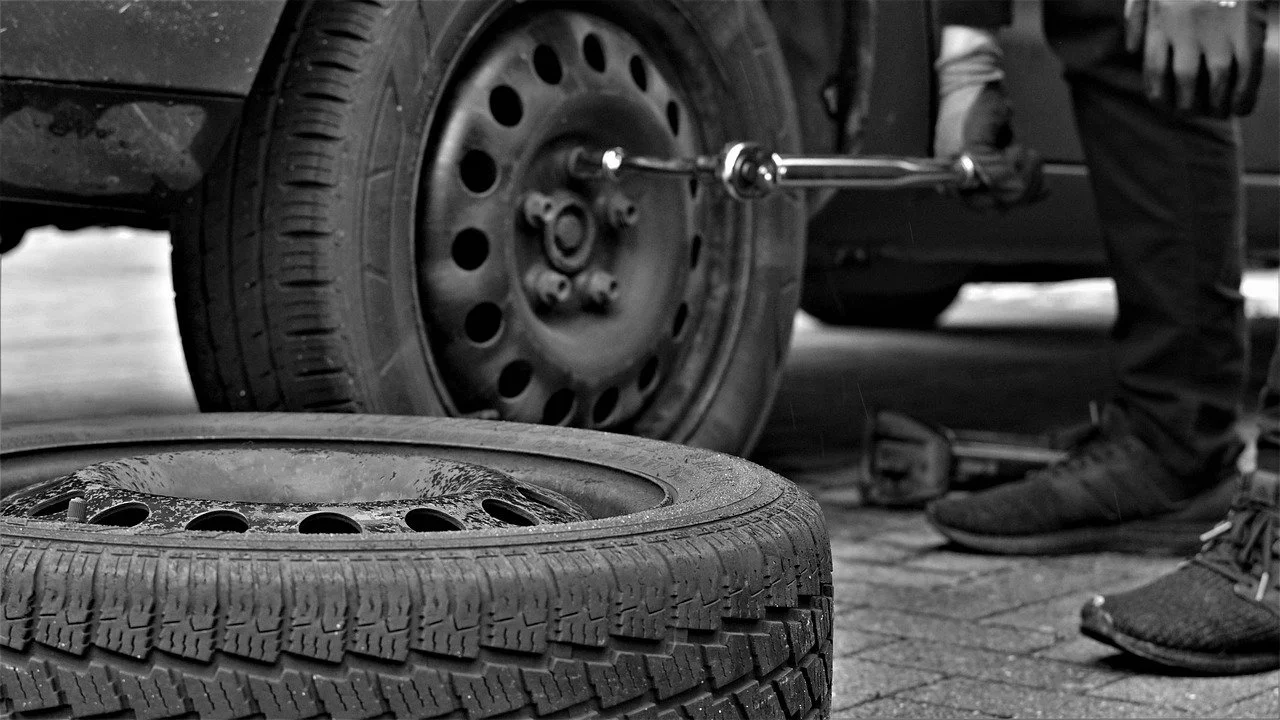
The first genuinely cold morning of the season, somewhere in that stretch between Halloween and Thanksgiving, a lot of people back down the driveway and find the little yellow horseshoe with the exclamation point glowing at them. Ask around and you'll have two answers inside a minute. It's just the cold, don't worry about it. Or it'll go off on its own by lunchtime.
Neither answer is wrong, exactly, which is most of the problem.
Cold does lower your tire pressure, and the light may go out by lunchtime, but the cold almost certainly isn't what turned it on, and the light clearing in the afternoon doesn't mean the thing that caused it cleared too. If it came on this morning, your tires were low yesterday afternoon as well, just nothing was telling you so.
The physics, briefly
Air in a sealed container loses pressure as it cools, and a tire is a sealed container. The figure to carry around is roughly one PSI for every ten degrees Fahrenheit.
That's a rule of thumb rather than a law, but it holds up well enough across the temperatures most of us actually drive in. Set your tires to 35 PSI on a mild October afternoon around 70 degrees, walk outside on a 25-degree January morning, and they'll read somewhere near 30. Nothing escaped. The air just takes up less room when it's cold.
The same principle running the other way is why pressures read high after a highway run. Tires build heat, and four or five PSI of gain after half an hour at speed is unremarkable. Which is why every pressure figure you'll ever be handed is a cold pressure, and why cold has a technical definition: three hours parked, or under a mile driven. Check them warm and you'll get a higher number, decide everything's fine, and drive off on tires that aren't.
Where "it's just the cold" breaks down
Now the part other blog posts don’t mention, either because they don’t know or because it involves arithmetic.
The federal standard requires that light to illuminate when a tire falls 25 percent or more below the pressure on the sticker in the door jamb.. That's a far bigger gap than most people picture. On a car speced at 35 PSI, you're down around 26 before anything comes on at all. Call it a nine-PSI hole.
Nine PSI is a lot to lose to weather. Working backward from the one-per-ten rule, starting from a properly inflated tire on a 70-degree day, it would need to be somewhere near twenty below zero outside before temperature by itself dragged you across that line.
It has not been twenty below in Charlotte (that I know of).
Which means something else contributed, and the something else happens to be the part you can actually do something about.
Your tires are leaking right now
No tire is perfectly sealed and none ever has been. Air works its way out through the rubber, past the bead where the tire seats against the wheel, and around the valve stem. It's slow, it's entirely normal, and it doesn't pause overnight. On a healthy tire with no puncture and a clean wheel, estimate about one PSI a month.
Which sounds like a rounding error until you give it a season.
Here's the version that plays out in a few million driveways every autumn. You set all four to 35 in June, maybe before a trip. You drive the car around all summer. Maybe someone forgets to check the pressures at the oil change. By the time November arrives you've quietly handed back five PSI to seepage and you're sitting at 30 on a warm afternoon with no idea.
Then a front comes through overnight and drops fifty degrees, and there's the other five.
Twenty-five PSI, light on, and it feels like the cold did it because the cold is the thing that visibly changed. The cold was only ever the last five.
Reading the light properly
The light has two behaviors, and they don't mean the same thing, which is worth knowing before you spend a morning on the wrong fix.
Steady illumination means at least one tire is 25 percent or more below the sticker. Add air.
A light that flashes for a minute or ninety seconds at startup and then settles into steady illumination is saying something different: the system has lost the ability to monitor itself. Dead sensor battery, a sensor that never made it back in after a tire change, a receiver fault, etc. No amount of air clears that one, though plenty of people spend a Saturday finding out.
Every single year, on the first truly cold morning of the season, our phones would ring off the hook with owners getting ready to leave for work and their tire pressure light was on.
Direct TPMS sensors run on a sealed internal battery, and depending on who you ask and how the car's been used you get somewhere in the eight to ten year range before they start dropping out. They aren't rebuildable, so a dead battery means a new sensor. Worth thinking about them as a set rather than individually: if the first one goes at year eight, the other three were built the same week and are running the same clock, and you'd probably rather deal with that once than be surprised three separate times over one winter.
A minority of cars, generally smaller and older ones, use indirect TPMS instead. There are no sensors in the wheels at all. The system watches wheel speed through the ABS sensors and infers a low tire from the fact that a low tire has a smaller rolling radius and turns slightly faster than the other three. Nothing to run out of battery, which is genuinely nice. The tradeoff is that indirect systems have to be reset by hand after you add air, so if you filled all four and the light sat there unmoved, that's very likely all that's happening. The procedure is in the owner's manual, usually a button somewhere under the dash or an item buried in a cluster menu.
What to do about it
Check them cold, first thing, before you've driven anywhere.
Use the number on the door jamb label rather than the one molded into the sidewall. The label is what the engineers specified for that particular car with those particular tires. The sidewall figure is the maximum pressure the tire can safely contain, which is a different question with a much bigger answer. People inflate to the sidewall number all the time and then can't work out why the ride turned harsh and the middle of the tread wore out at 25,000 miles.
If all four are down somewhat evenly, add air, then verify with a gauge you brought yourself. Station air hoses frequently have no gauge or the gauges are often very inaccurate, and there's no particular reason to believe the one bolted to the machine behind the ice freezer has been calibrated since it was installed. A decent pencil gauge costs less than lunch and will outlast the car. If one tire is down significantly more than the rest but not flat, then you need to have someone check the tire ASAP.
Reset the system, if yours is the kind that needs it.
And if the light is back inside a week, that isn't seasonal, that's a leak. Five PSI in seven days is a nail you haven't found yet, a valve stem that's given up, or corrosion where the tire beads against an aluminum wheel. The last one is common on older cars and gets misdiagnosed constantly, because it presents as a slow mystery leak and the actual fix is a dismount, clean, and reseal.
Two questions that come up every year
Should you run a few extra PSI through the winter? No. Set to label, cold, and let the physics happen. The label figure already assumes the tire warms up once you're moving. Deliberately running high to stay in front of the warning light costs you contact patch and braking on exactly the cold, wet roads where you wanted more of both.
Does nitrogen fix it? Not meaningfully. Nitrogen molecules are slightly larger than oxygen molecules so a nitrogen fill seeps a little slower, and there's less water vapor in the mix. Both effects are real, both are small, and neither repeals the ideal gas law. A nitrogen-filled tire gives up the same pressure in the same cold snap as an air-filled one. If a shop includes it with a set of tires, take it. It isn't worth a special trip and it doesn't get you out of checking.
The actual obstacle
None of this is hard. You know how to put air in a tire, and so does every other person currently driving around with the light on. Knowledge was never the issue.
The issue is that checking your pressures means a trip to the gas station, hunting down the machine, discovering it wants quarters, discovering the hose gauge reads four high, and spending a piece of a Saturday morning when you had other plans. So it turns into a job for someday, and someday tends to show up around the same time as the warning light.
A cordless pump on a shelf in the garage solves this. Four tires, in the driveway, ten minutes, on your own clock, with your own gauge. Multiply this time saving times the number of daily drivers and weekend cars in your family which hint hint will probably need the same treatment at the same time.
A couple years ago, I bought an AVID Power 20V cordless tire pump. It was about $55 on Amazon. I use it on all four of our family’s daily drivers, my 911 and all of our bicycles. It has a rechargeable battery which I have to remember to charge after I inflate all those tires then put back in the case. This is a little annoying, but par for the course with rechargeable portable devices. I haven’t used any other brands, this just happens to be the one I bought and it has been really reliable.
The math worth saying out loud is what all the thing replaces. Or one call to roadside assistance, which is generally the number that settles it.
The car in the garage without a light
TPMS became mandatory on US passenger cars for the 2008 model year, which means the most interesting car in your garage almost certainly doesn't have it. No sensors, no warning, nothing on the dash at all. You are the tire pressure monitoring system.
And a car that sits is the worst case for every bit of this, because seepage doesn't care whether you're driving. Something that hasn't turned a wheel since last September has given up exactly as much pressure as the daily parked beside it, except nothing has warmed those tires up to improve the reading. So on the first decent Saturday in November you back it out on tires twenty percent low, sitting on rubber that's been in one position for four months and has flat spots to prove it, and the first few miles are worse than they had any need to be.
Check the pressures before it moves. Every time, not on a schedule. It's ninety seconds with a gauge you keep in the door pocket, and it's comfortably the cheapest thing you can do for a set of tires you'd rather not replace this year.
I don’t check my tires in the 911 if I am running to Cars & Cappuccino, but for any weekend drives, rallies or drives out of Charlotte, I always check them.
What it costs to leave it
Running underinflated isn't just a ride quality complaint. It wears the outer shoulders of the tread and leaves the center alone, so you buy tires earlier than you needed to. It puts heat into the sidewall, which is the mechanism behind most blowouts that aren't punctures. It stretches braking distances on cold wet pavement, which is where you wanted them shortest. There's a fuel economy penalty as well, small and per-PSI, and it's the item most articles open with despite being the least of your problems.
The cost that never appears on a shop estimate is what happens to a warning light that's been on since November. It stops being a warning light. It becomes part of the dashboard, like the clock. And then one morning it's telling you something new and you look straight past it.
So
Check them cold, use the door jamb number, and put a portable electric pump in the garage so the whole business takes ten minutes instead of a Saturday. Stick a gauge in the glovebox of the one that doesn’t have a light to nag you about it.
Then go find somewhere to drive it.
