The Back Seat Has a Clock on It
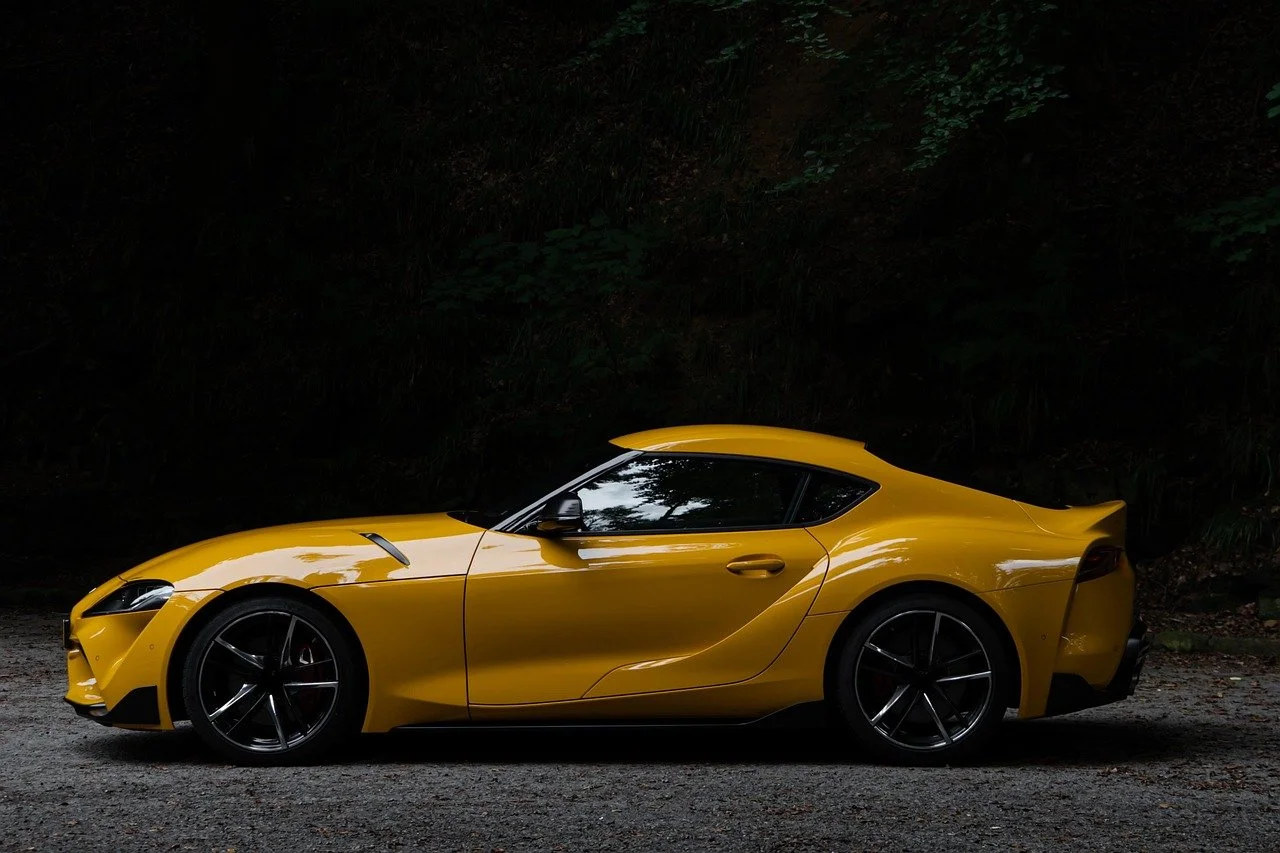
We had a Mk1 Audi TT when the kids were small. It worked. Two seats up front, two seats behind that Audi clearly did not take seriously, and both kids belted in with room over their heads. We drove it places. It was, for a couple of years, an actual family car in the sense that the whole family was in it.
Then one Saturday somebody in the back said her head was touching the glass. Not a complaint. A report. And that was the end of it, more or less. There was no warning period, no season of getting snug. The car was fine and then the car was over.
Later we had a 1995 Cabrio with a VR6 swapped into it. The kids fit in the back. Fit is the right word and not a generous one. And here is the part I did not expect: they did not particularly enjoy riding back there with the top down. In my head, top-down convertible with the kids in the back is a core memory being created in real time. In practice it is wind, noise, sun in the eyes, and nothing to look at but the back of my head. They tolerated it. They did not ask for it.
I have a friend who put real money into a Cabrio of his own. Nice work, done properly, more into it than the car was worth and he knew that going in, the way we all know it going in. It was great with toddlers. Then the toddlers turned into kids with legs, and he wanted out, and he found out what everybody finds out, which is that the market prices your car as a car and not as a receipt folder. He was upside down.
None of that is a story about picking the wrong car. All three of those were good cars. It is a story about a specific mistake, which is treating "the kids fit" as a fact instead of a date.
What runs out, and in what order
Legroom goes first and it goes gently. You can buy legroom back. The front passenger slides forward. The driver's seat comes up a notch. Somebody rides with their knees at an angle for twenty minutes and nobody dies. Legroom is negotiable, which is why it feels like the main constraint.
Headroom goes second and it goes all at once. There is no negotiating with a roof. Worse, the thing that eats headroom in the cars we like is not the roof height at the driver's head, it is the taper behind it. Fastbacks, hatches, anything with a roofline that starts falling right after the B-pillar. The rear head sits under the steepest part of the curve. You have a couple of inches, then you have none, and there is no adjustment for it anywhere in the car.
And it’s actually worse than it sounds, because kids don't grow evenly. Growth runs outward first. Feet, then legs, then the torso last. Which means sitting height, the only measurement that matters for a low roof, is the number that jumps last. Your kid gets tall in the legs for a while and the back seat still works fine, and you think that you have years left. Then the torso catches up in a hurry and you lose the car in about six months. That is why the TT felt like it ended in one Saturday. It sort of did.
Patience goes third. This is the one nobody plans for. A kid who physically fits but is bored, hot, wind-blasted, and can't see out is a kid who stops volunteering to come. You still have four seats. You just stop being able to fill them.
Go measure something
The whole problem is that "do they fit?" gets answered by looking, and looking is worthless. If you already have a coupe or hatch, here is a version that takes ten minutes and gives you an actual number.
Sit your kid on a hard chair against a wall, shoes off, back straight, and mark the wall at the top of their head. That is sitting height. Write it down with the date, because you are going to want the trend more than the number.
Then go out to the car and measure from the middle of the rear seat cushion, compressed the way it compresses with a person on it, straight up to the headliner at the point directly above where that kid's head actually sits. Not at the tallest point of the opening. At their point. In a hatch or a fastback, those are different places, and the difference is the whole ballgame.
Subtract. What you have left is your clearance in inches.
Now turn inches into years. Through the elementary years, a kid gains a couple of inches of standing height annually, and only some fraction of that lands in the torso. Through the adolescent spurt, they gain much faster and a larger share of it lands in the torso. You don't need precision here. You need to stop thinking in inches and start thinking in birthdays. Four inches of clearance is not four inches. It is maybe three or four years, and only two of those are guaranteed.
Ideally, do this before you buy. Do it again every birthday. It costs nothing and it converts a vague worry into a date on the calendar, and a date on the calendar is a thing you can plan around instead of a thing that ambushes you.
The seats that lie
Some back seats are worse than their spec sheet suggests, and they are consistently the ones enthusiasts talk themselves into.
The extended-cab pickup is the champion. Rear-facing or side-facing jump seats, a bench with no meaningful backrest angle, and a cab wall directly behind it. It is genuinely fine for a booster seat and genuinely miserable for a ten-year-old, and the transition happens fast. People buy extended cabs specifically because "the kids can ride back there." The kids can ride back there for about four years.
Coupe rear seats are the second. A 2+2 is a luggage shelf with seatbelt anchors. Some of them are quite good luggage shelves. None of them are going to hold a teenager for the drive to the mountains.
Convertibles are the third, and they lie in a different direction. The rear seat in a Cabrio-shaped car often has surprisingly decent headroom, because there is no roof to hit. What it doesn't have is comfort at speed, a view, or any of the experience the front seats are having. The car is not too small. The car just only makes two people happy at a time, and it will not tell you that at the test drive because you drove it alone.
The money runs out at the same time the headroom does
Here is the ugly overlap, and my friend with the Cabrio hit it perfectly.
The years when the car is at its most usable as a family car are also the years you are most likely to be spending on it. You bought it, you sorted it, you fixed the deferred stuff, you did the thing you always wanted to do to it. Your money is at maximum depth in year three or four. That is also, very often, exactly when the back seat expires.
So the decision to sell arrives at the worst possible moment financially, and it arrives with urgency attached, because now the car is in the way in the garage and it isn't earning its keep. Urgency is what actually costs you. Being upside down on a car is survivable if you can sit on it for two years and let the market come to you. Being upside down and needing it gone by spring is how you eat the whole spread.
Which gives you an underrated buying criterion: before you buy, look at what the car sells for in the condition you will actually have it in, and look at how long those listings sit. Not the auction results for the perfect one. The ordinary ones. If a car takes six months to move at a fair price, you need to know that in year one, not in year four when your kids no longer fit.
Decide what the car is for, out loud, before you buy it
This is the part I'd go back and tell myself.
There are two honest categories. There is a car that carries the family, and there is a car that carries you. Both are legitimate. The trouble only starts when one car is quietly asked to be both, because the second job is the one that always gets revoked.
If you buy a car as a family car, buy the roof. Upright rear glass, four doors, a rear seat that was designed by someone who thought about a person sitting in it. Wagons, older sedans, boxy small SUVs from before everything got a fast roofline. There is more enthusiast-grade metal in that shape than the internet lets on, and it buys you ten or twelve years instead of three.
If you buy a car as your car, say that out loud at the point of purchase. Say it to your spouse. "This is a two-seat car that occasionally has four seats. When the kids get big, it becomes a Saturday-morning car that I take out alone or with one of them." Nobody's feelings get hurt by that in year one. In year four, if you never said it, the same fact shows up as a betrayal, and the honest question "why do we even still have this" is a much harder conversation than the one you could have had at the beginning for free.
The families I know who kept their cars are almost all in the second group. They never had to sell, because they never needed the car to do a job it was going to lose.
The two-car outing, honestly assessed
The fallback everyone reaches for is taking two cars. Sometimes that's genuinely good. Short hop, nice morning, one kid rides with you, the other goes with your spouse, everybody arrives happy and one kid got shotgun in the fun car.
Sometimes it is a logistics tax. Two cars means two drivers, coordinated departures, a place to put both at the other end, and one adult who does not get to have a beverage or a conversation for the duration. Do that on a Saturday when everyone is already tired and see how many times you volunteer for it.
Be realistic about which of those your life actually produces. If the honest answer is that a two-car outing happens twice a year, then the weekend car is a solo car, and you should plan the calendar around a solo car. Which mostly means defending a couple of hours that belong to you and the car and nobody else, on purpose, on the calendar, in ink. That is a better outcome than the alternative, which is the car sitting in the garage in a state of permanent theoretical family usefulness while the battery dies.
What I'd actually do
Don't sell a car you love because your kids got tall. That is the wrong lesson and it is how people end up out of the hobby entirely, one reasonable decision at a time.
Do this instead. Measure the kid and measure the car, today, and write both numbers down. Convert the difference into years and put the year in your head. Decide now, before you're emotionally committed, whether this is a car the family will ride in or a car you drive. If it's the first, buy the tall roof and stop pretending the pretty roofline will just work out. If it's the second, buy whatever you want and stop quietly billing it to the family as a shared asset.
The back seat has a clock on it. You can't stop the clock. You can absolutely know what time it is.
